
Writing Workshop
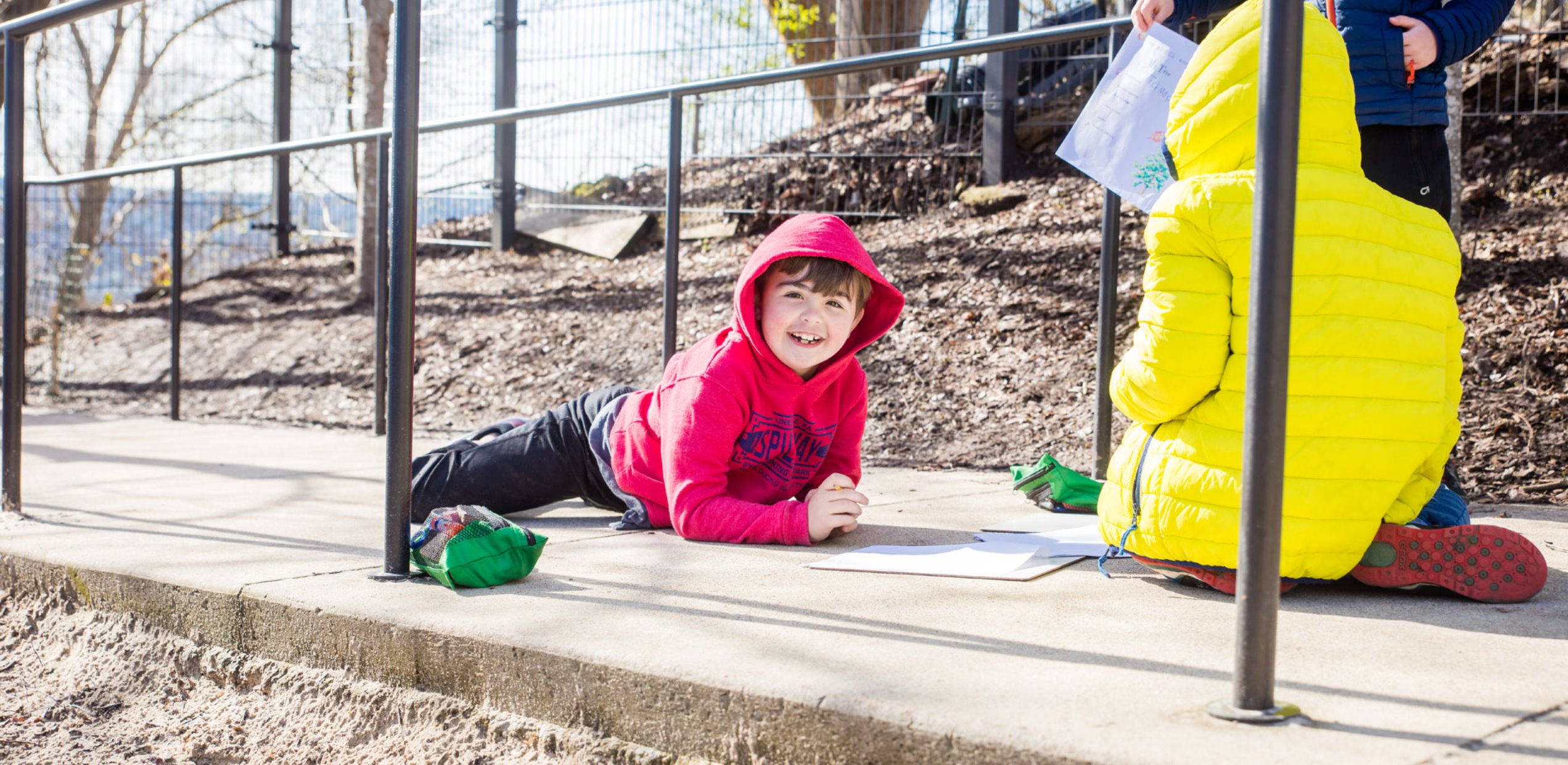
Children use literacy, science observation skills, and artistic expression to create nonfiction books, personal narratives, and illustrated stories.


At the heart of our Primary program is a deep commitment to relationships—among children, between students and teachers, and between the school and our families. We intentionally create opportunities for children to feel known, connected, and part of a vibrant learning community. A few examples include:
At the Primary Level, we recognize that young children learn best when their cognitive and social worlds are connected.
In our intentionally designed K–2 community, children learn by doing, exploring, collaborating, and reflecting. Every learning experience is grounded in our knowledge of child development, supporting their emerging independence, nurturing their curiosity, and supporting the whole child as both a thinker and a community member.

Whenever possible, learning at the Primary Level is interdisciplinary. A single experience may weave together literacy, math, science, social studies, art, and collaborative problem-solving. Examples include:
Children use literacy, science observation skills, and artistic expression to create nonfiction books, personal narratives, and illustrated stories.
An inquiry-based unit integrating engineering, physics, literacy, and math as students research, design, test, and revise their own bridge structures.
Students observe outdoor phenomena, write reflections, sketch diagrams, and use early data collection skills.
Math, social studies, writing, and collaboration come together as children create goods, advertise them, exchange items, and reflect on the experience.
Since children make sense of their world by exploring it, learning in Falk Primary is deeply hands-on and engaging. Whether they’re playing games, experimenting like scientists, or tackling design challenges, students are encouraged to take initiative and grow as independent thinkers.

Primary language arts instruction meets children where they are, helping them discover their interests as readers and grow as expressive, confident writers. Students also explore literacy through visual and dramatic arts, music, block play, and other creative pathways. These varied modes of expression help children connect literacy to their broader learning journey and integrate it across projects, content areas, and media.
In Primary math, children build understanding through authentic exploration and inquiry. Daily lessons and routines invite students to investigate patterns, share strategies, model their thinking, and engage in meaningful discussion. This approach nurtures deep conceptual understanding and lays a strong foundation for future learning.
Primary science instruction encourages children to think, question, and explore the world around them, developing a deeper understanding of scientific concepts. Teachers support their discovery by providing opportunities to make their thinking visible through words, drawings, and other creative formats.
Social studies at the Primary Level begins by fostering children’s curiosity about the world around them, first examining the classroom and immediate family, then their neighborhood and community. Children share artifacts from their lives to learn about one another and explore the concepts of past, present, and future.
Primary students also participate in regular Spanish instruction in an immersion-based setting that prioritizes communication and joyful language learning. Lessons are designed to help students build foundational skills in speaking, listening, reading, and writing, using developmentally appropriate activities, songs, stories, and games.
In addition to learning the language, students explore the rich diversity of Spanish-speaking cultures. Through stories, traditions, music, and celebrations, they develop an early understanding and appreciation of cultures beyond their own—an important step in becoming empathetic and globally minded learners.
Finally, Primary students engage regularly with humanities subjects including library, digital citizenship, music and performing arts, physical education, yoga and mindfulness, WonderLab, technology, the visual arts, and Falk Woods.
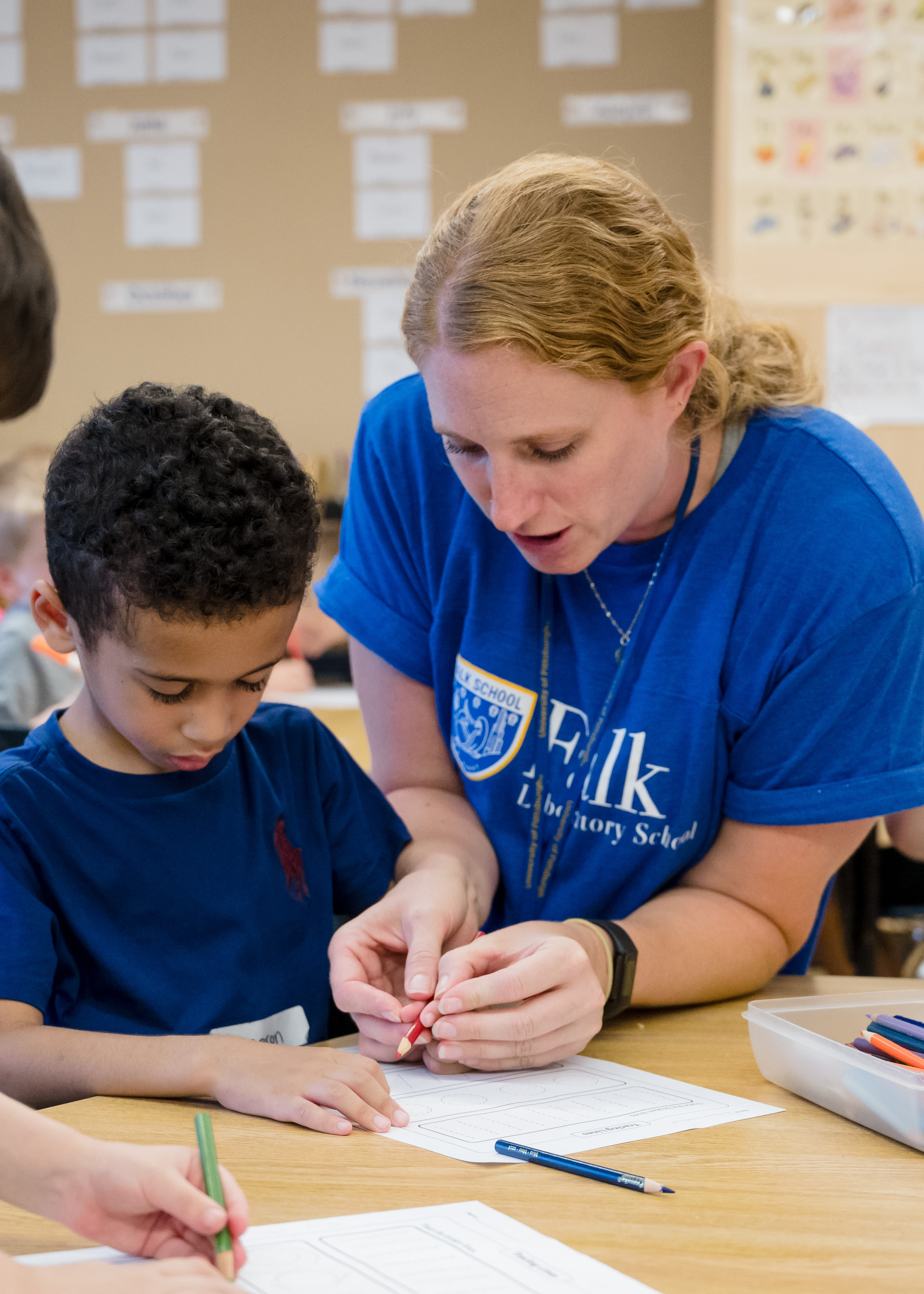
In the first and second grades, children experience a looping model. This means that they will remain with the same teacher and in the same classroom for both academic years. We value this teaching model because we know that children thrive when they have a consistent environment in which all members of the classroom, including students, teachers, and families, have the opportunity to develop and maintain strong relationships.